The central idea
A useful experiment answers a specific question, even when the result is inconclusive.
Turn an opinion into a testable question
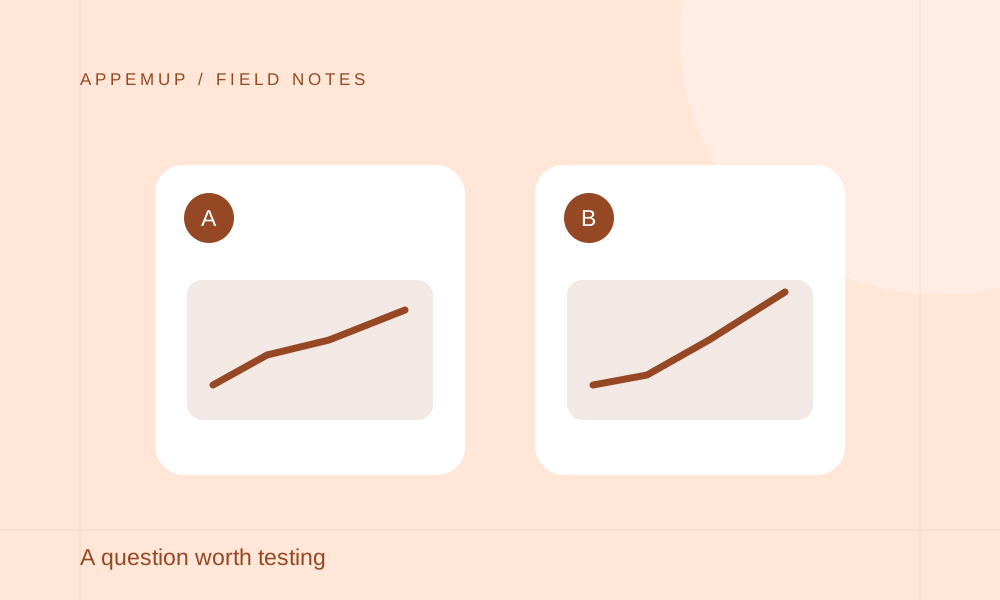
‘The new design looks better’ is a preference. ‘Showing a shared shopping list first will help visitors understand collaboration’ is a hypothesis. Write down the audience, the change, and the behavior you expect before creating the treatment.
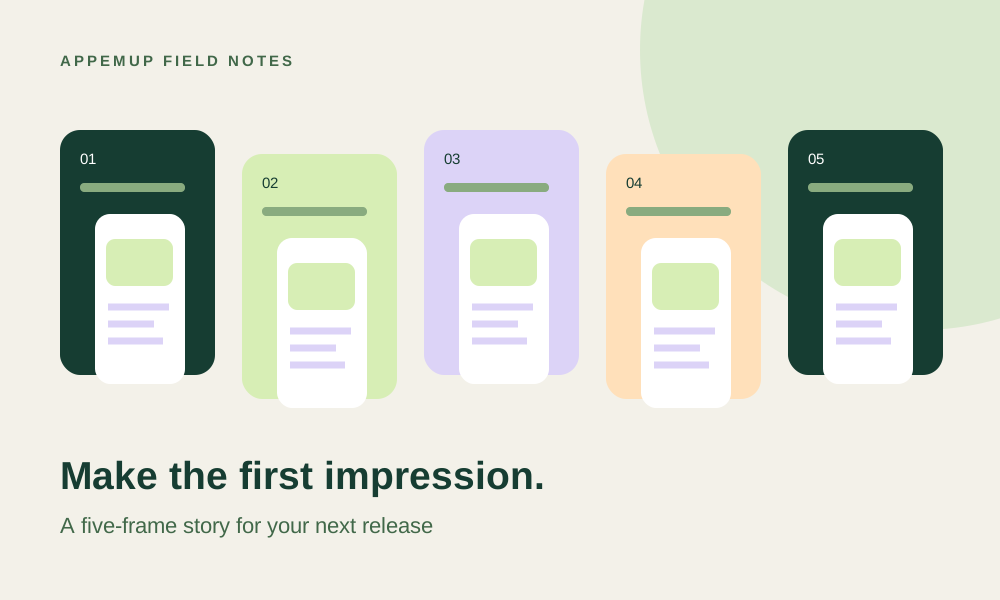
For example, keep the visual system and later screenshots consistent while changing the opening frame from an overview to a collaboration task. You are testing which message works better, rather than changing every element and trying to guess which one mattered.
Use a store experiment for store outcomes
Apple’s product page optimization lets developers test product-page treatments and review their performance in App Store Connect. Check eligibility and setup in the official documentation before planning a release around a test. Prepare the assets and confirm which locales and audience the test will cover.
Choose the primary metric before launch and keep a written record of the control, treatment, start date, and other marketing activity. Website page views are useful for your website; they do not establish whether a store screenshot treatment caused more downloads.
Give uncertainty a place in the decision
Small samples can swing dramatically. Avoid declaring a winner after a good afternoon or repeatedly stopping and restarting whenever the numbers look favorable. Use the platform’s reported confidence and experiment guidance, and decide in advance how you will review the result.
As an illustrative calculation, moving from 20 installs per 100 eligible visitors to 22 is a two-percentage-point increase, or a 10% relative increase. That arithmetic alone does not prove that the treatment caused the difference. Sample size, uncertainty, and the reporting definition still matter.
Keep a record you can learn from
Save the tested images alongside the hypothesis and result. Note changes to acquisition campaigns, pricing, releases, or seasonal demand that could complicate interpretation. An inconclusive result is useful: it may tell you that the difference was too small to detect with the available traffic.
If the result supports the treatment, use it as a starting point for another focused question. If it does not, revisit the audience need or the way the screen explains it. A library of documented experiments is more valuable than a folder of unexplained ‘winning’ designs.
- One written hypothesis
- A stable control and a focused treatment
- A metric and review plan selected before launch
- A record of uncertainty and external changes
- An explicit next decision, including keeping the control
Sources & further reading
Platform guidance checked September 7, 2026. Workflows and examples are AppemUp editorial recommendations; illustrative examples are not measured results.
Ready to try it with your app?
Choose a template, add your captures, and build a screenshot story.
Open the free editor